DAWSON CREEK, B.C. - The B.C. government says new electricity infrastructure in the South Peace region will help support a dramatic expansion of natural gas production while unlocking billions of dollars in industrial investment.
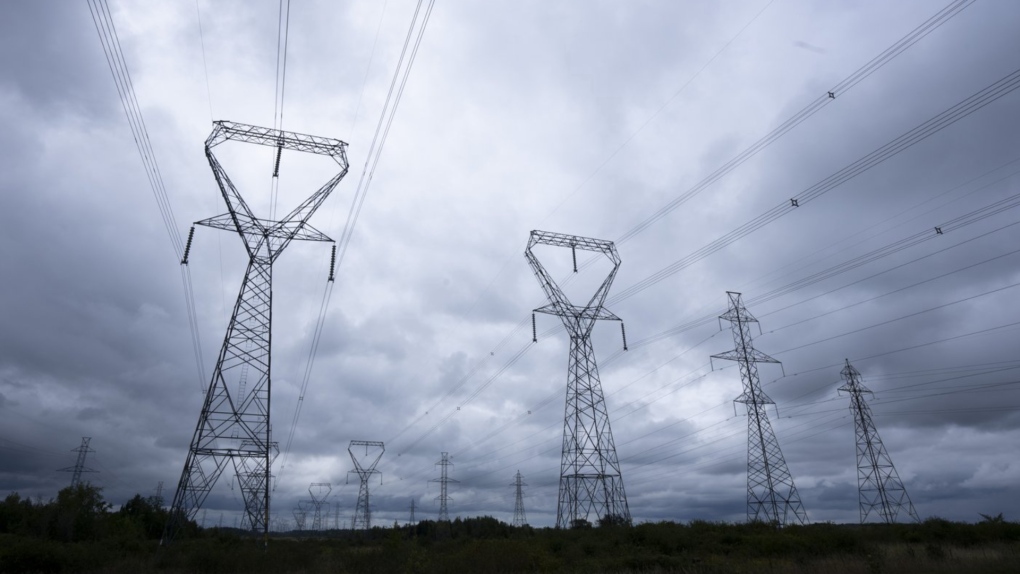
The province has exempted BC Hydro’s South Peace System Reinforcement Project from requiring a certificate of public convenience and necessity, a move aimed at accelerating transmission and substation upgrades needed to provide additional power capacity in northeastern B.C.
The announcement is closely tied to the governing Conservatives’ broader energy strategy.
The province says it plans to double natural gas production by 2032 and triple production by 2035, goals that will require significant expansion of processing facilities, pipelines and supporting infrastructure across the Northeast.
“Our commitment to make B.C. an energy superpower starts in the South Peace,” said Larry Neufeld, Minister of Energy, Mines and Petroleum Resources.
According to the province, growing natural gas production and processing activity in the region is increasing demand for electricity, while limited transmission capacity has created uncertainty for companies considering major investments.
“We’re going to double natural gas production by 2032 and triple it by 2035. We will get this province back on track, welcoming investment, creating jobs and supporting the services British Columbians depend on. B.C. is open for business again, and it’s going to become the fastest place in North America to permit an LNG facility,” said Neufeld.
One of the projects expected to benefit is NorthRiver Midstream’s proposed expansion of its West Doe Gas Plant northwest of Dawson Creek.
The company plans to increase processing capacity from 100 million to 400 million cubic feet of natural gas per day in a project valued at roughly $500 million.
To help make additional electrical capacity available sooner, Neufeld exempted BC Hydro from the certificate requirement for upgrades to substations and transmission infrastructure in the South Peace region.
The province says the West Doe expansion and other projects that could move forward as a result represent more than $3 billion in combined investment.
BC Hydro’s South Peace System Reinforcement Project will upgrade the Dawson Creek and Bear Mountain substations and allow existing transmission lines between the facilities to operate at a higher voltage.
The upgrades will increase capacity without the need to build new transmission lines.
The province says the added capacity will not only support the West Doe expansion but could also help advance projects planned by NorthRiver Midstream, Tourmaline, ARC Resources and Shell.
Together, those developments could add up to 900 million cubic feet per day of upstream and midstream natural gas capacity.
Government estimates suggest the projects could generate as much as $8.8 billion in economic activity over their lifetimes while supporting hundreds of construction jobs and dozens of permanent industry positions.
BC Hydro expects work on the South Peace System Reinforcement Project to begin in 2028, with the upgraded system scheduled to be in service by 2030.
However, the announcement drew criticism from the Canadian Association of Physicians for the Environment.
Vancouver family physician and former CAPE president Melissa Lem questioned whether BC Hydro ratepayers should bear the cost of electricity infrastructure that supports natural gas expansion.
“Are everyday residents of British Columbia, as ratepayers into BC Hydro, paying for this electricity expansion that will benefit global gas companies while B.C.’s underfunded healthcare system continues to suffer from frequent ER closures?” Lem said.
Lem argued the decision would help NorthRiver Midstream, which itself is owned by Brookfield Infrastructure Partners expand gas processing while increasing costs for residents and contributing to health and climate concerns.
“This decision was custom designed to push a private, for-profit corporation towards quadrupling its gas processing. Meanwhile, it will make life more unaffordable for people in B.C. as their energy bills go up, while this industry’s impacts harm human health and the climate, and contribute towards driving healthcare professionals away from the region,” she said.
“As a physician, I know energy costs are a social determinant of health: when bills rise, households need to cut elsewhere – on food, medication, heating – and health suffers. Clean electricity should power homes, hospitals and transportation, not fuel a boom in fracked gas that harms health today and for generations to come,” said Lem.
.